
Congratulations to the 2025 Winners
of the Frederick J. Streng Award for Excellence in Buddhist-Christian Studies
Perry Schmidt-Leukel
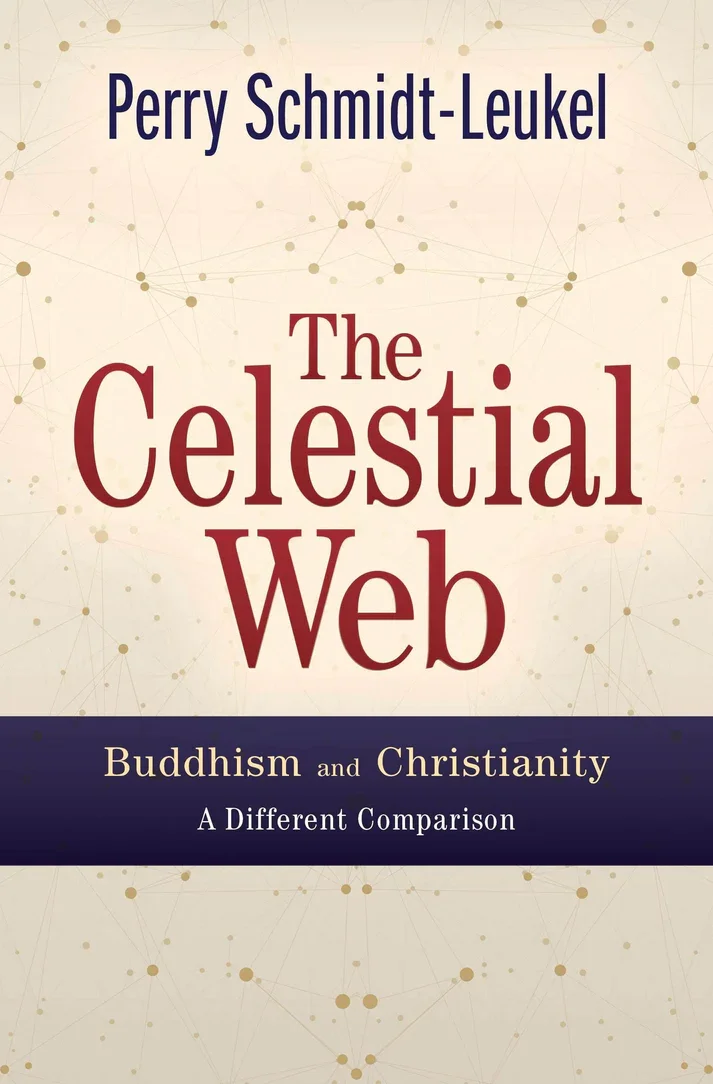
The Celestial Web: Buddhism and Christianity—A Different Comparison
(Orbis, 2024))
The 2025 Frederick J. Streng Award for Excellence in Buddhist-Christian Studies has been given to Perry Schmidt-Leukel for his 2024 volume, The Celestial Web: Buddhism and Christianity—A Different Comparison. Perry Schmidt-Leukel is a Senior Professor of Religious Studies and Intercultural Theology at the University of Münster, Germany. Schmidt-Leukel's work introduces a methodological approach he refers to as a "fractal" approach to religious diversity, shifting away from a monolithic approach to Buddhist-Christian comparative studies. This work opens up avenues for the comparative study that moves past binaries and will surely have a lasting impact on the advancement of the field.
Nominations now Open for the
2026 Frederick J. Streng Award for Excellence
in Buddhist-Christian Studies
The Society for Buddhist-Christian Studies is now receiving nominations for the 2026 Frederick Streng Book Award for Excellence in Buddhist-Christian Studies. Nominations must be received by June 15, 2026.
The criteria for nominating and making the award are:
The subject matter of the book should be inspired by and relevant to Buddhist-Christian relations, but subject matter is not narrowly limited to books on dialogue or to books that are half on Christianity and half on Buddhism. The award is open to studies across a wide range of disciplines and perspectives: textual, doctrinal, philosophical, historical, social, and spiritual.
The scholarship must be original and the writing clear. The book must make an important contribution to issues relevant to the context of Buddhist-Christian dialogue.
Books can be considered for nomination within five years of their publication date (i.e. the 2026 award must be for a book published in 2021 or later).
Nominations can be made by any person, by contacting Mark Heim (mark.heim@yale.edu). Nominations should include book volume title, author’s full name, publisher, year of publication, and a brief letter of support regarding the nomination. Also, full contact information should be included for the person making the nomination, including institutional affiliation (if applicable). Publishers of books must be willing to supply review copies to members of the committee for evaluation in order for the book to be considered. Suggested books may address work in Buddhist-Christian studies across a wide range of disciplines and approaches: textual, doctrinal, philosophical, social, historical and spiritual. Recent winners of the award include Perry Schmidt-Leukel, The Celestial Web: Buddhism and Christianity, A Different Comparison (2025), Carol Anderson and Thomas Cattoi eds., Routledge Handbook of Buddhist-Christian Studies (2024) and Peter Feldmeier, Experiments in Buddhist-Christian encounter (2023).
The son of a Lutheran minister, Fred Streng opted to attend University of Chicago, receiving Bachelor of Divinity and Ph.D. in the History of Religions, with a dissertation on Nagarjuna’s understanding of emptiness. He later taught at Southern Methodist University and became noted scholar in Buddhist-Christian studies.
Fred Streng was one of the founding members of the Society. He died in 1993 while serving as its third president. See memoriam here. As David Chappell said of him there: "What is the sound of liberating truth?" This question was presented by Fred as his life's koan in his Presidential Address at the Fourth International Buddhist-Christian Conference in August, 1992. Although granting that others might offer many different answers, it is revealing that the place where he found the sound of liberating truth was in "mutual transformation." Three primary areas where mutual transformation offered liberating truth for Fred were in the internal and external pluralism found in Buddhist-Christian dialogue, second in the dialogue between the personal commitments of religion and the objectivity of academic-scientific studies, and lastly in the encounter between religion and the various physical and human problems of our global community.